



Wholesaler vs Distributor:
What’s the Difference and Why It Matters
If you run a business that buys and resells products, chances are you have heard people use the words “wholesaler” and “distributor” like they mean the same thing.
Sometimes they do. Often they don’t.
And the wholesaler vs distributor difference matters more than people think—because it affects your inventory strategy, how customers expect you to operate, how you price, and even what type of software you need to stay organized.
If you’ve ever wondered, “Which one am I?” or “Why does this matter for my inventory?” this post will make it clear.
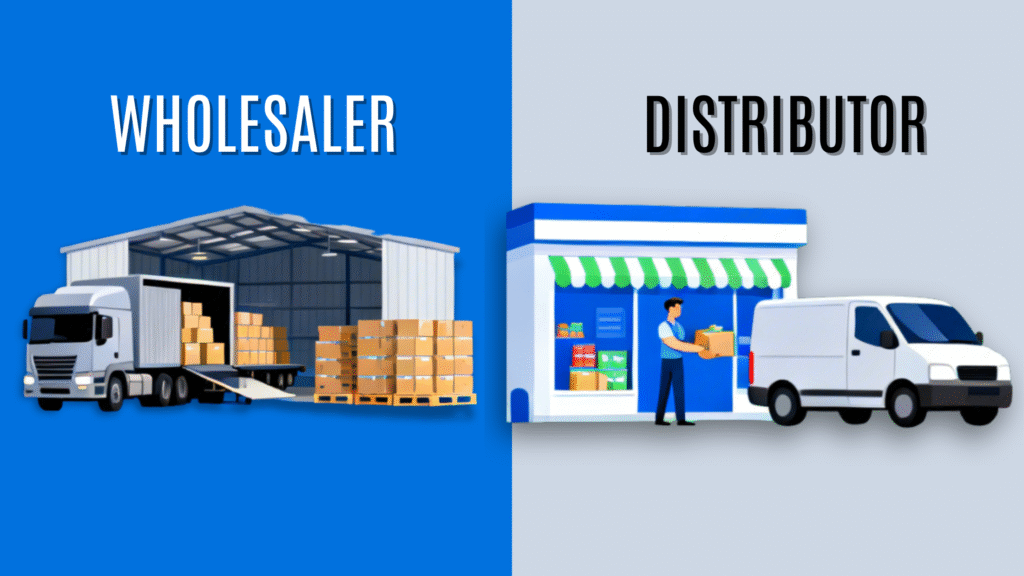
Why People Confuse Wholesalers and Distributors
From the outside, wholesalers and distributors can look identical. Both buy products in bulk. Both store inventory. Both sell to businesses instead of consumers.
But the real difference shows up in what happens after the sale and what customers expect from you.
A wholesaler is usually focused on availability and price. A distributor is usually focused on service and supply reliability. Let’s get deep into wholesalers vs distributors by explaining each individually.
What a Wholesaler Really Does
Wholesalers typically win by moving product efficiently.
They often carry a wide range of items, sometimes across multiple brands, and focus on turning inventory quickly. Their customers may be retailers, small contractors, resellers, or other businesses that want bulk pricing and fast shipping.
A wholesaler’s daily workflow is often centered around three things: purchasing, storing, and shipping.
When a wholesaler is running well, customers feel like: “They always have it, the price is fair, and I can get it quickly.”
What a Distributor Really Does
Distributors tend to operate with more structure and responsibility around supply.
They may represent certain manufacturers or product lines more formally, and they often serve specific customer groups or regions. In many cases, distributors aren’t just selling a product—they’re supporting an ongoing supply relationship.
That’s why distribution work often includes more than shipping orders. It can involve customer-specific pricing, scheduled deliveries, replenishment planning, returns handling, and sometimes even product support.
When a distributor is running well, customers feel like: “They keep me stocked, they understand my needs, and I can rely on them.”
The Most Practical Difference:
What Your Customers Expect
There is an easy way to tell the difference between wholesalers and distributors.
If your customers mainly care about price and availability, and they place orders as needed, your business probably operates like a wholesaler.
If your customers depend on you to keep their supply stable, expect consistent lead times, and rely on you for replenishment or service, your business probably operates like a distributor.
Many businesses are somewhere in between. You might be a wholesaler for part of your catalog and a distributor for certain product lines or key accounts.
Wholesaler vs Distributor Operations:
Where the Real Challenges Show Up
Even though the models are different, the biggest operational problems often look the same.
Inventory errors, picking mistakes, and “we thought we had it” situations cause trouble in both businesses. But the impact can feel different.
For wholesalers, problems often show up as delayed shipments, wrong items, and missed sales because stock isn’t accurate.
For distributors, problems show up as service failures. Customers are expecting you to keep them stocked, but you can’t because inventory visibility isn’t reliable, or reorder planning is off.
That’s also why stockouts and overstocking are common in both models. If inventory data isn’t trustworthy, replenishment decisions become guesswork.
If this is something you are dealing with, it ties directly to inventory planning. Check this guide to learn how to prevent stockouts with the 7 best tips for efficient inventory management.
Multi-Location Inventory Makes the Difference
Even Bigger
The wholesaler vs distributor difference becomes even more important when you have more than one location.
If you stock inventory across multiple warehouses, bins, or service areas, inventory accuracy has to be strong. Otherwise, your team spends time searching, transferring, and correcting mistakes instead of fulfilling orders.
This is where multi-location inventory management becomes a must-have, not a “nice-to-have.”
How C2W Inventory Supports Both Wholesalers
and Distributors
Whether you operate more like a wholesaler or a distributor, the basics stay the same: you need accurate inventory, fast fulfillment, and clear visibility.
C2W Inventory helps businesses improve day-to-day operations with barcode scanning for receiving and picking, real-time inventory updates, and multi-location tracking so your team always knows what’s available and where it is.
It also supports reorder points and reorder quantities with alerts or email notifications when stock reaches a threshold—so replenishment becomes proactive instead of reactive.
And if you are switching from spreadsheets or another system, migration can be simple. Businesses can prepare one spreadsheet with their initial data, and the C2W Inventory team can help handle the migration from there.
So Which One Are You
If you are still unsure, here’s the simplest way to decide.
If your business is mainly built around buying and reselling inventory efficiently, you are closer to a wholesaler.
If your business is built around supplying customers consistently over time, and your service level is part of what customers pay for, you’re closer to a distributor.
Either way, understanding the difference helps you build the right workflows and avoid the inventory problems that slow down growth.
SEO FAQ Section: Wholesaler vs Distributor
What is the main difference between a wholesaler and a distributor
A wholesaler primarily focuses on buying products in bulk and reselling them, usually based on price and availability. A distributor often has a closer relationship with manufacturers and customers and may provide additional services like scheduled replenishment, customer-specific pricing, and ongoing supply support.
Is a distributor the same as a wholesaler
Not always. Some distributors operate like wholesalers, and some wholesalers offer distributor-style services. The difference usually comes down to customer expectations and whether you provide structured services beyond basic selling and shipping.
Which is better, wholesaler or distributor
Neither is better. They are different business models. Wholesalers tend to win on variety, price, and speed, while distributors tend to win on reliability, service level, and long-term customer relationships. The best model depends on your products, customers, and how you deliver value.
Can a business be both a wholesaler and a distributor
Yes. Many businesses are a mix. You may operate like a wholesaler for some product lines and like a distributor for key accounts or specific brands where service expectations are higher.
Do wholesalers and distributors need different inventory systems
The core needs are similar, but distributors often need stronger support for customer-specific pricing, replenishment planning, and service level expectations. Both models benefit from accurate inventory, multi-location tracking, and barcode scanning to reduce receiving and picking errors.
Why does wholesaler vs distributor matter for inventory management
BIt is because it changes how you plan stock, fulfill orders, and avoid stockouts. Wholesalers often focus on availability and fast turnover, while distributors must maintain a reliable supply for customers. In both cases, accurate inventory data is critical for preventing stockouts and overstocking.